ARTIFICIAL INTELLIGENCE [AI] IS NOT USED IN COMPOSING NYPPL SUMMARIES OF JUDICIAL AND QUASI-JUDICIAL DECISIONS.

May 13, 2025

The Law and the Emoji - Part 2

N.B.: The trial court's decision was appealed. Below is Professor Goldman's analysis of the appellate court's decision, which included a dissenting opinion.


Thumbs-Up Emoji Formed Binding Sales Contract in Canada–Achter v. South West Terminal
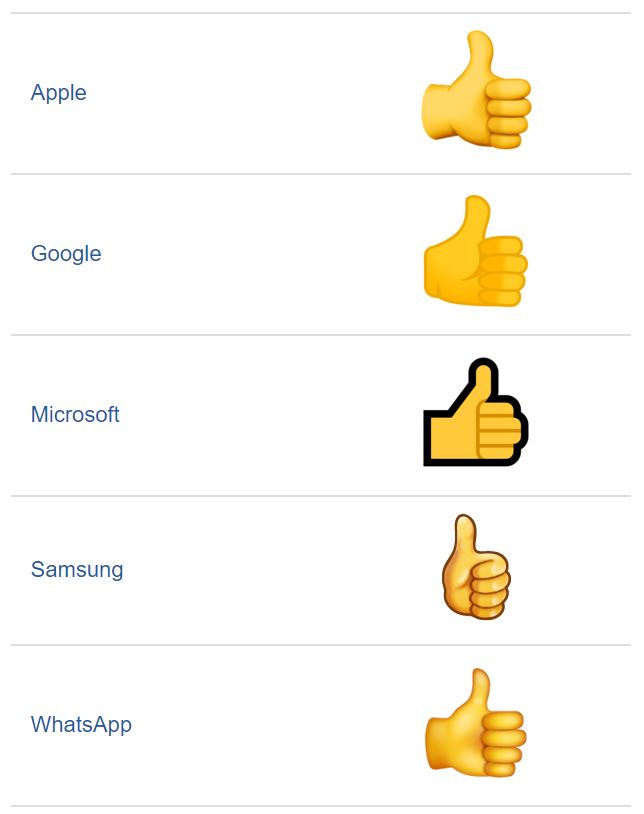
This is the instant-classic lawsuit involving a Saskatchewan farmer who text-messaged a “thumbs-up” emoji in response to an offer to buy his flax. The lower court found that the seller’s thumbs-up emoji constituted assent to the buyer’s offer and awarded the buyer $82k (Canadian) in damages. Prior blog post. On appeal, the Saskatchewan Court of Appeals affirmed the decision on a 2-1 vote.

Note: as usual for Canadian opinions, this is a long read–220 paragraphs, approximately 28k words.

The Majority Opinion

For the most part, the majority opinion endorses the lower court decision, repeatedly saying (in essence) that the lower court judge got it right (or least didn’t make any obvious errors). The lower court judge should feel good about his work. That judge was surely dealing with an emoji interpretation case for his first time, and operates in a community not known for being at the cutting edge of technology law. Nevertheless, the lower court judge wrote a strong and thoughtful opinion that held up on appeal. At the same time, the majority opinion also reflects the standards for appellate review in Canada, which provide some deference to the lower court ruling.

I especially liked the majority’s framing that emoji interpretation isn’t really a new skill for common law courts:

human communication is often subtle. Words, phrases, gestures and symbols may carry more than one meaning. All of this gives rise to the potential for ambiguity and uncertainty and, indeed, litigation. The law has long accommodated for this, and courts are often called upon to determine the legal import of a multitude of communication types between individuals. The fact that, in this case, one part of the communication comprised an emoji simply provides a modern twist to this otherwise rather unremarkable observation

In other words, we need to be careful about overassuming emoji exceptionalism. When I do emoji law trainings for judges, I remind them that emojis are just another form of non-textual communication, and all of the techniques the judges routinely use to interpret human communication are likely to work with emojis as well.

(The most significant emoji exceptionism is the cross-platform depiction diversity issue I discuss in my paper, but that hasn’t generated much activity in court).

The seller argued that he had used the thumbs-up emoji to acknowledge receipt of the buyer’s text, not to assent to it. The majority says that is theoretically possible:

The judge would have committed error had he approached his decision by suggesting that a thumbs up emoji invariably means “I agree” or always bears something akin to that meaning. But he did not do that…

It is irrelevant that a thumbs up emoji may be used in other contexts to communicate other messages or ideas. What matters is the use to which it was put by Mr. Achter in the eyes of an objective observer

Nevertheless, the majority says that the seller chose this particular emoji in this particular context:

ALC submits that, if Mr. Achter had simply intended to acknowledge receipt of a draft contract from Mr. Mickleborough, “it is hard to imagine what other emoji would have been more apt”. However, the premise of this submission is that Mr. Achter was limited to communicating by way of emojis. It was Mr. Achter who chose to use the thumbs up emoji, when in the past he had used words like “looks good”, “ok” and “yup” in a similar situation to form binding contracts.

As a result, the emoji functioned as a signature:

The thumbs up emoji expressed Mr. Achter’s agreement to the contract and the act of sending the emoji with the metadata identified, or authenticated, Mr. Achter as the person expressing that agreement with that intention…

There may be some validity to the proposition that, taken together, the thumbs up emoji with the metadata that accompanied Mr. Achter’s text message could not result in a signature if his text message had not been sent in response to one from Mr. Mickleborough or if there had not been a history of authenticated communications between the parties. However, I do not need to decide if these hypothetical changes to the fact pattern would affect the result of this case.

While Canadian law resembles US law about electronic signatures, the emoji-as-signature issue may have been an easier call in the US courts. I think that the E-Sign and UETA laws in the US make it entirely clear that the emoji usage in this context would satisfy their requirements as a signature.

It appears the seller argued that a signature needs to be a newly created artifact, like how a wet-signature (ink on paper) creates something that didn’t previously exist. The majority does not agree:

I can agree with ALC that Mr. Achter did not create the thumbs up emoji for the purposes of signing contracts. However, the same can be said about the letters that together make up a person’s name. In either case, what is controlling is the use to which the thumbs up emoji or those letters are put.

The majority summarizes its conclusion:

Mr. Achter’s use of the thumbs up emoji communicated his agreement to the terms of the contract proposed by Mr. Mickleborough with the expectation that ALC would be held to it. Because Mr. Achter sent that emoji in a text message from his personal cellphone, there was electronic data that he knew would identify him as the maker of the mark and communicate his agreement to the contract. His text message therefore signed the contract as surely as if he had printed the photograph that Mr. Mickleborough had sent to him and then written his name on that print copy and returned it to Mr. Mickleborough.

The Dissenting Opinion

The dissent’s opinion wasn’t easy to read. The judge used a lot of Latin and seemingly hid his takeaway point. He says he “would take judicial notice of the fact that a thumbs-up emoji can signify approval or agreement.” However, he doesn’t think the signature requirement was satisfied because, I believe, the emoji would have needed to be affixed to the contract draft, not communicated in a message separated from the contract text.

This makes me wonder how the dissenting judge would interpret a multi-email negotiation where there is no single email defining the parties’ terms. Would the judge take the position that a contract never formed because there was no “signature” to the contract when the emails collectively would have to constitute the “contract”?

The dissent seems especially odd in light of the parties’ course of dealing. This buyer and seller had previously come to contract terms when the buyer sent a form contract and the seller replied with a brief text (e.g., “OK”) functioning as the signature to that contract. If the parties decide that’s how they would like to communicate with each other, the court should respect that.

Implications

I think this opinion reinforces some lessons we took away from the lower court ruling:

  • Emoji law sits on top of longstanding legal principles, many of which the courts can apply without any exceptionalism.
  • Using emojis as a communicative tool can have major legal significance. People often misperceive emojis as some second-tier form of communication with no legal implications of their usage. This case showed that a single emoji has substantial consequences–in this case, $82k (CAN). As usual, we are responsible for the words–and emojis–we choose.
  • Emojis need to be interpreted in context. Emojis derive meaning from the content preceding them in a conversation, as do all other forms of human communication. Further, in this case, the parties’ course of dealing informed the emoji’s meaning. If the seller and buyer had never dealt with each other, the court might not have been as confident that the thumbs-up was assent and not just acknowledgment. But in the context of a pattern of similar dealings, it was more obvious that the emoji was assent.
  • The fact that emojis have multiple meanings isn’t unusual. Many aspects of human communication develop multiple meanings, including slang. And that fact alone doesn’t mean that emojis are fatally ambiguous. Courts are very good at interpreting potentially ambiguous communications, whether that’s words, emojis, or anything else.

Case CitationAchter Land & Cattle Ltd. v South West Terminal Ltd., 2024 SKCA 115.


May 12, 2025

The Law and the Emoji

A single 👍 emoji contained in an email that the sender alleged was simply intended to indicate “got it” resulted in a legal battle involving the payment of about $62,000 for certain goods and raised the question "Can an emoji seal a contract?".  

Source: The following was posted on the Internet at:

 https://99percentinvisible.org/?p=45069(50) 😅⚖️ - YouTube


"In 2021, a Canadian farmer named Chris Achter responded to a buyer’s grain contract with a simple 👍 emoji. What followed wasn’t just a misunderstanding—it was a legal showdown that captured global attention.

"Achter, based in Saskatchewan, had a long-standing business relationship with the buyer. They often finalized grain deals over text. That year, when the buyer sent over a standard flax contract, Achter responded with a thumbs up. Months later, as drought conditions drove up flax prices, the buyer expected a delivery. None came.

"The buyer sued.

"The central question? Does a thumbs up emoji constitute a digital signature?

"A judge ruled that, yes, it did.

"According to Eric Goldman, a law professor at Santa Clara University, Achter later claimed the emoji was merely an acknowledgment—not acceptance. But the court disagreed, calling the emoji a “nontraditional but valid” form of agreement. The court awarded the buyer over $60,000 in damages.

"Goldman put it bluntly: “That single thumbs up emoji was worth tens of thousands of dollars.” 👍

"Goldman believes this approach should be the norm. “It’s exactly what we would hope the courts would do,” he said."


May 10, 2025

New York State Comptroller Thomas P. DiNapoli releases statement addressing the 2025-2026 New York State budget

"After extended deliberation, the Governor and Legislature have finalized a state budget.

"Major policy changes in the budget that will be felt across the state include the most significant changes to the Foundation Aid formula since its inception, long-awaited relief to small businesses by paying off the Unemployment Insurance Trust Fund loan, and reduced personal income tax rates for lower- and middle-income families starting in 2026. Other new funding initiatives include expanding access to community college for adult learners and preserving access to child care. The budget also fully funds the Metropolitan Transportation Authority’s $68.4 billion 2025-2029 capital plan, reflecting a major investment in transportation infrastructure in the New York City Metropolitan area.

"The budget includes significant state-funded increases in education, health and other spending, and authorizes an additional $23 billion in public authority backdoor borrowing. General aid for local governments is largely flat, despite growing signs of fiscal strain at the local level as pandemic aid has ended and costs continue to rise. Deep uncertainty surrounding tariffs, the economy and actions in Washington casts a long shadow on this budget.

"Market volatility and declining business and consumer confidence may upend the state’s revenue projections and increase the already sizeable outyear budget gaps. Actions by Congress may also have a large impact on the state’s finances in the months ahead, and may jeopardize many of the critical safety net programs that New Yorkers rely on and that have always been predominantly funded by the federal government. Federal changes being considered would shift significant costs for Medicaid, food benefits and other programs to states. While the state has a record $8.75 billion in its statutory reserves, these funds are needed to protect against economic and fiscal disruptions, and the state does not have the resources to backfill federal reductions on an ongoing basis.

"The time to develop a strategy and structural reforms is before a crisis, yet this budget includes no serious cost containment measures, particularly in Medicaid, where it is most needed. In these uncertain and disruptive times, the Legislature gave extraordinary powers to the Executive to make mid-year spending cuts in the event of budget imbalance. However, this provision creates further uncertainty for those that depend on state aid.

"The full financial and economic implications of this budget will be clearer when the Financial Plan is released, and close monitoring will be needed to ensure that the state is on a sustainable path and able to navigate the challenges ahead."

The Comptroller also noted that his office "will continue to carefully monitor economic conditions and the state’s cash position and release an analysis of the enacted budget in the coming weeks.”

###


Editor in Chief Harvey Randall served as Director of Personnel, State University of New York Central Administration; Director of Research, Governor's Office of Employee Relations; Principal Attorney, Counsel's Office, New York State Department of Civil Service; and Colonel, JAG, Command Headquarters, New York Guard. Consistent with the Declaration of Principles jointly adopted by a Committee of the American Bar Association and a Committee of Publishers and Associations, the material posted to this blog is presented with the understanding that neither the publisher nor NYPPL and, or, its staff and contributors are providing legal advice to the reader and in the event legal or other expert assistance is needed, the reader is urged to seek such advice from a knowledgeable professional.

CAUTION

Subsequent court and administrative rulings, or changes to laws, rules and regulations may have modified or clarified or vacated or reversed the information and, or, decisions summarized in NYPPL. For example, New York State Department of Civil Service's Advisory Memorandum 24-08 reflects changes required as the result of certain amendments to §72 of the New York State Civil Service Law to take effect January 1, 2025 [See Chapter 306 of the Laws of 2024]. Advisory Memorandum 24-08 in PDF format is posted on the Internet at https://www.cs.ny.gov/ssd/pdf/AM24-08Combined.pdf. Accordingly, the information and case summaries should be Shepardized® or otherwise checked to make certain that the most recent information is being considered by the reader.
THE MATERIAL ON THIS WEBSITE IS FOR INFORMATION ONLY. AGAIN, CHANGES IN LAWS, RULES, REGULATIONS AND NEW COURT AND ADMINISTRATIVE DECISIONS MAY AFFECT THE ACCURACY OF THE INFORMATION PROVIDED IN THIS LAWBLOG. THE MATERIAL PRESENTED IS NOT LEGAL ADVICE AND THE USE OF ANY MATERIAL POSTED ON THIS WEBSITE, OR CORRESPONDENCE CONCERNING SUCH MATERIAL, DOES NOT CREATE AN ATTORNEY-CLIENT RELATIONSHIP.
New York Public Personnel Law. Email: publications@nycap.rr.com